About this Discussion

In 2019, over 92 billion tonnes of materials were extracted and processed, contributing to about half of global CO2 emissions. This “take-make-dispose” approach and the resulting waste – including plastics, textiles, food, electronics and more – is taking its toll on the environment and human health.

A circular economy model replaces this end-of-life concept with restoration, shifts towards the use of renewable energy, eliminates the use of toxic chemicals, which impair reuse and return to the biosphere, and aims for the elimination of waste through the superior design of materials, products, systems and business models. The circular economy approach improves resource efficiency and reduces environmental impact on natural capital by designing products in a more recyclable way, adopting efficient technology and turning waste into a resource. The circular economy offers a trillion-dollar opportunity in terms of possible material savings, innovation and job creation, improved land productivity and soil health, and green growth. Achieving this, however, requires strong collaboration between leaders from business, government and civil society.

Upcoming Events

Circular Economy

A post is already pinned to this stream. Would you like to replace it?

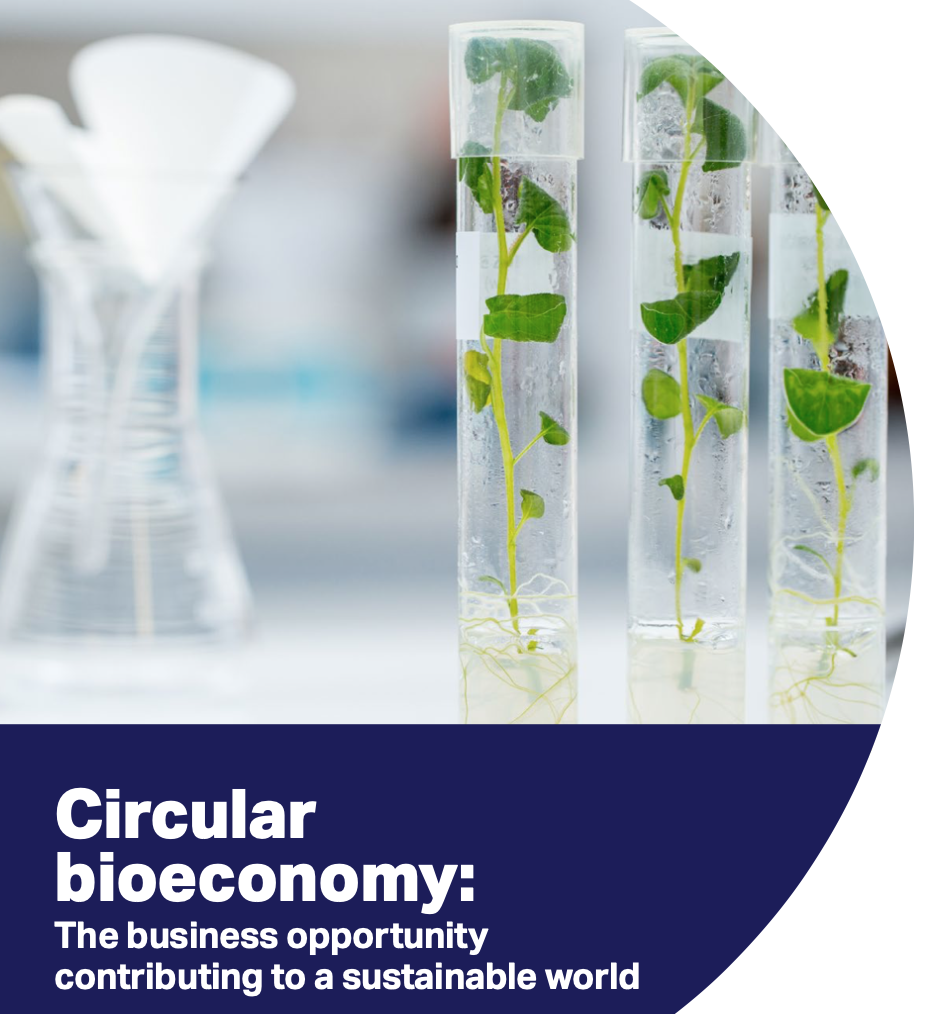
The circular bioeconomy: A business opportunity contributing to a sustainable world -- The shift to a sustainable, low-carbon, circular bioeconomy represents a business opportunity worth USD $7.7 trillion

Read More

https://www.wbcsd.org/Programs/Circular-Economy/Factor-10/Resources/The-circular-bioeconomy-A-busine...

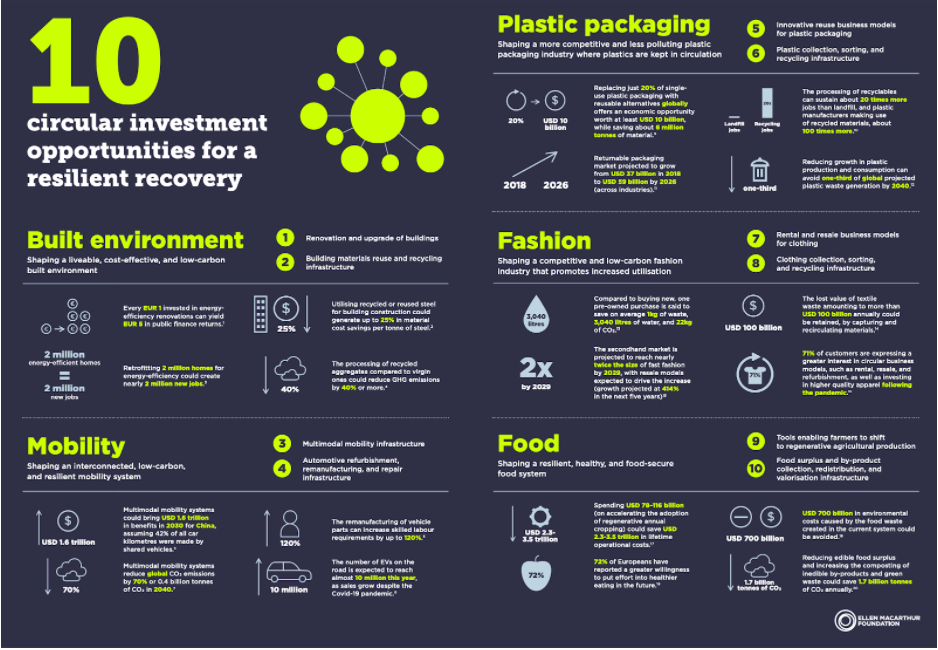
How a circular economy could aid the COVID-19 recovery — Returnable packaging, digital supply chains, regenerative agriculture, and more!

Read More

https://www.weforum.org/agenda/2020/11/circular-economy-covid-19-recovery-warwick/
Vienna Energy Forum

The Vienna Energy Forum is going virtual with the launch of its very first VEF Virtual Series: a platform to discuss the role of the energy transition in the development of three end-use economic sectors: Food Systems Industry Products In collaboration with UNIDO, … Read More

Can plastic recycling ever be economically viable and can recycling eliminate the plastic pollution problem? In a live Q&A session with Laurie Lane-Zucker of Impact Entrepreneur, Rob Kaplan, founder and CEO of Circulate Capital discuss the ways that impact investors are helping to fight the ocean plastic issue by funding plastics innovation and new supply chain solutions.

Read More

https://www.youtube.com/watch?v=s3COHUvuc1M&feature=youtu.be
Default profile image

Created a Post in Circular Economy

A basic content proposal on sustainability for management undergraduate courses
a paper about undergraduate teaching and sustainability

Read More

https://www.researchgate.net/publication/338354741_A_basic_content_proposal_on_sustainability_for_ma...
Default profile image

Created a Post in Circular Economy

A PROPOSAL FOR THE MANAGEMENT OF HUMAN COMPETENCES FOR SUSTAINABILITY
this article talks about human aspects of sustainability, interesting

Read More

https://www.researchgate.net/publication/342759933_A_PROPOSAL_FOR_THE_MANAGEMENT_OF_HUMAN_COMPETENCE...

Resource extraction is responsible for 90% of species loss, 90% of water stress and 50% of greenhouse gas emissions, according to the new UNEP report. It calls for a circular economic model, that businesses will use fewer resources, recycle more and extend the life of their products.

Read More

https://www.unep.org/news-and-stories/story/new-trade-rules-vital-protecting-planet
United Nations Environment Programme(UNEP), Coordinating Body on the Seas of East Asia(COBSEA)

Background SEA of Solutions is an annually occurring partnership event towards solving plastic pollution at source, convened by the United Nations Environment Programme (UNEP) and the Coordinating Body on the Seas of East Asia (COBSEA), through the SEA circular project supported by the Government… Read More