About this Discussion

In 2019, over 92 billion tonnes of materials were extracted and processed, contributing to about half of global CO2 emissions. This “take-make-dispose” approach and the resulting waste – including plastics, textiles, food, electronics and more – is taking its toll on the environment and human health.

A circular economy model replaces this end-of-life concept with restoration, shifts towards the use of renewable energy, eliminates the use of toxic chemicals, which impair reuse and return to the biosphere, and aims for the elimination of waste through the superior design of materials, products, systems and business models. The circular economy approach improves resource efficiency and reduces environmental impact on natural capital by designing products in a more recyclable way, adopting efficient technology and turning waste into a resource. The circular economy offers a trillion-dollar opportunity in terms of possible material savings, innovation and job creation, improved land productivity and soil health, and green growth. Achieving this, however, requires strong collaboration between leaders from business, government and civil society.

Upcoming Events

Circular Economy

A post is already pinned to this stream. Would you like to replace it?

Created a Post in Circular Economy

SWITCH-Asia has been busy stocking up its resource library this year with new country profiles, national documents, and regional resources on the transition to low-carbon, resource efficient and circular economies in Asia. Take a look!

Read More

https://www.switch-asia.eu/resource-library/

Created a Post in Circular Economy

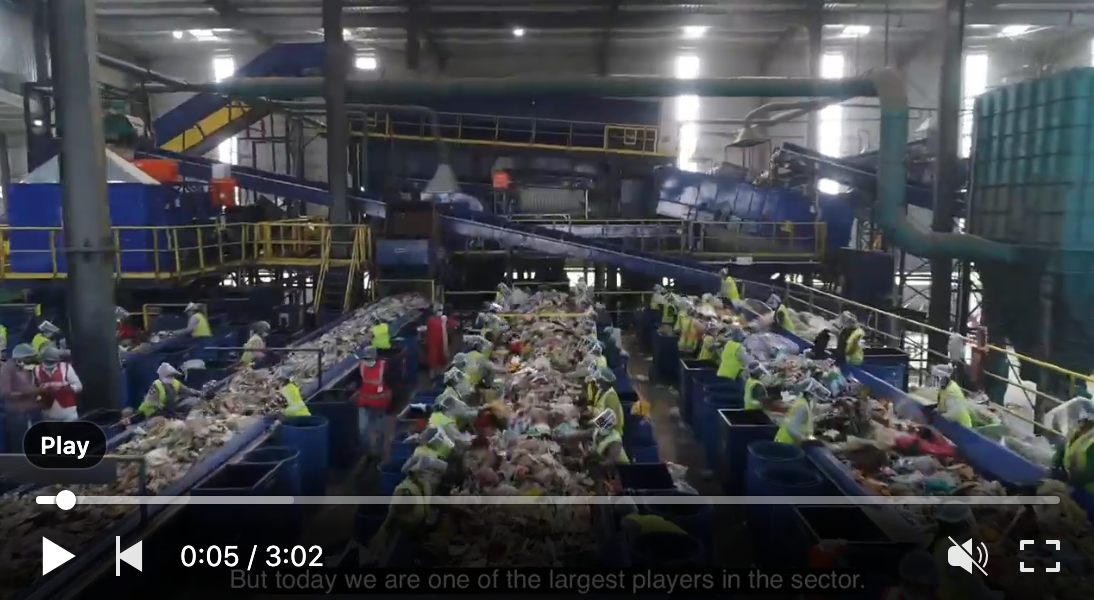
Learn more about Circulate Capital's newest portfolio company -- NEPRA Resource Management Pvt. Ltd. - Let's Recycle -- and its unprecedented solution for dry waste collection and processing in India

Read More

https://www.linkedin.com/posts/circulatecapital_circulate-capital-investment-portfolio-spotlight-act...
Default profile image

Created a Post in Circular Economy

Testing genuine savings as a forward-looking indicator of future well-being over the (very) long-run

Read More

https://www.sciencedirect.com/science/article/abs/pii/S0095069613001083
Default profile image

Created a Post in Circular Economy

A framework for the practical application of the concepts of critical natural capital and strong sustainability

Read More

https://www.sciencedirect.com/science/article/abs/pii/S0921800902002720
Default profile image

Created a Post in Circular Economy

Default profile image

Created a Post in Circular Economy

A single indicator of strong sustainability for
development: Theoretical basis and practical implementation

Read More

https://www.afd.fr/en/ressources/single-indicator-strong-sustainability-development-theoretical-basi...

Created a Post in Circular Economy

"Lessons from 2020: time for a circular economy." -- In addition to updating its NDC, Cambodia is developing a national circular-economy strategy. Looking forward to seeing the final strategy and action plan next year!

Read More

https://asiatimes.com/2020/11/lessons-from-2020-time-for-a-circular-economy/
Default profile image

Created a Post in Circular Economy

this paper proposes a new theoretical approach to resolving the perennial dilemma of being uncertain about what discount rate to use in cost-benefit analysis. A numerical example is constructed from the results of a survey based on the opinions of 2,160 economists. The main finding is that even if every individual believes in a constant discount rate, the wide spread of opinion on what it should be makes the effective social discount rate decline significantly over time. Implications and ramifications of this proposed "gamma-discounting" approach are discussed.

Read More

https://www.aeaweb.org/articles?id=10.1257/aer.91.1.260
Default profile image

Created a Post in Circular Economy

Valuing ecosystem functions: an empirical study on the storm protection function of Bhitarkanika mangrove ecosystem, India

Read More

https://www.jstor.org/stable/44520810?seq=1