About this Discussion

With alarming speed, COVID-19 has infected tens of millions of people worldwide and killed more than one million. It has impacted economies and changed people's lives, particularly the poor and vulnerable who are already disproportionately impacted by climate change and other environmental, social, and economic risks.

The virus has also become central to national policy and has halted business operations in ways that were unimaginable. The economic impacts of these efforts are likely to be felt for years to come.

In addition to responses from government leaders, who are calling for support to cope with the twin crises of public health and rebuilding economies in sustainable and resource-efficient ways, industry and finance stakeholders also have important roles. This includes generating innovative solutions for diversifying production portfolios, building business capacities for sustaining growth, and aligning institutional investors’ fiduciary duties and stewardship practices with long-term decision-making and sustainable value creation.

Upcoming Events

Green Recovery from COVID-19

A post is already pinned to this stream. Would you like to replace it?

NEW RESEARCH

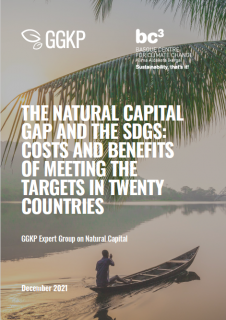
Basque Centre for Climate Change and GGKP developed an NCA methodology to assess the costs, benefits, and investment gap for achieving select natural capital-related SDG targets and applied it to 20 countries. The report found that for every nature-related SDG target analysed the benefits of investing in natural capital outweigh the costs.

By knowing which intervention will have the greatest impact in terms of natural capital and enhancement and financial return, this data can help governments and financial institutions prioritize their investments and meet their 2030 targets.

More from lead author Dr. Anil Markandya: ggkp.org/ZaY

Read More

https://www.greengrowthknowledge.org/research/natural-capital-gap-and-sdgs-costs-and-benefits-meetin...
pdfGGKP (2021). The Natural Capital Gap and the SDGs_Costs and Benefits_20 Countries.pdf8.21 MB

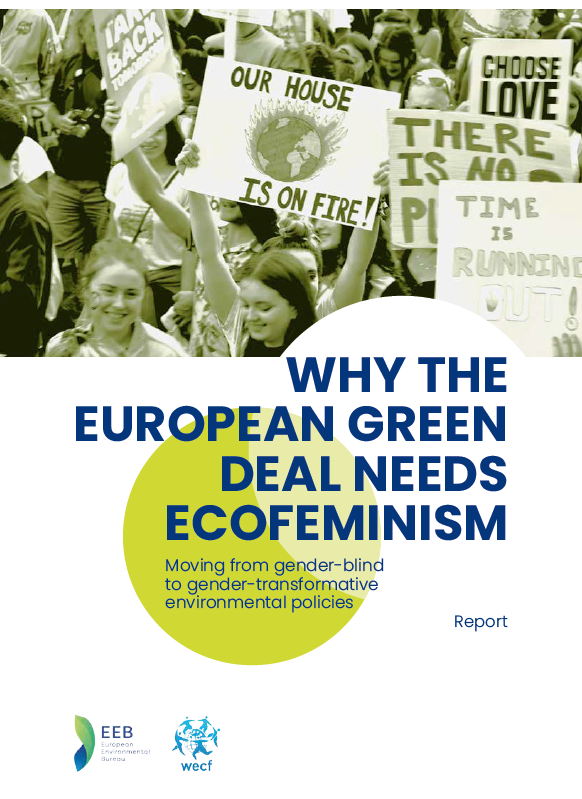
How can we identify gender gaps in current and future recovery measures? The integration of gender-transformative policies is necessary in driving a sustainable and inclusive recovery. Read more about the challenges and opportunities for gender policies in the European Green Deal:

Read More

https://www.globalwomennet.org/why-the-european-green-deal-needs-ecofeminism/

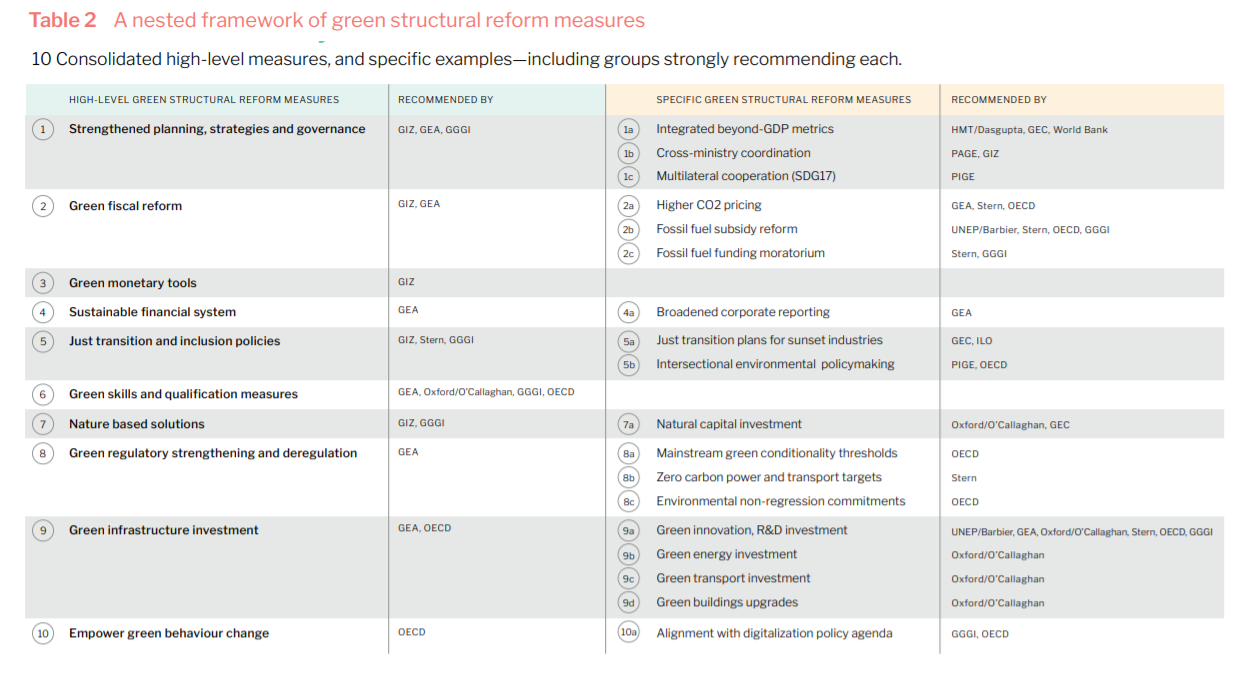
Hi all - A note for anyone interested that late last year at the OECD GGSD, GEC published a working paper on 'Setting a structural agenda for a green economic recovery from COVID-19' (with support from the partners for inclusive green economies (PIGE) group)
A link to the paper is included below, and a key table on the 'menu' of green structural recovery measures. We're looking at a revised / final version, so if anyone has any interest or suggested sources/resources, don't hesitate to get in touch.
https://www.greengrowthknowledge.org/initiatives/partners-inclusive-gre…

chris.hopkins [at] greeneconomycoalition.org (chris[dot]hopkins[at]greeneconomycoalition[dot]org)

Read More

https://www.oecd.org/greengrowth/Setting%20a%20structural%20agenda%20for%20a%20green%20economic%20re...

EEA Urban environmental sustainability transitions survey

Do you work for a European city? Are you involved in your city’s efforts on environmental sustainability?

Fill in this survey on the drivers and the barriers of the sustainability transition in the context of the Covid-19 pandemic

Read More

https://ec.europa.eu/eusurvey/runner/UrbantransitionsSurvey2022
Clara Mottura commented on Camille Andre's Post in Climate Change, Green Recovery from COVID-19, Sustainable Finance
How is green finance integrated in governments' regulatory landscape?

The Green Finance Measures Database – supported by the Global Environment Facility – is a critical tool to monitor jurisdictions’ leadership in defining market standards for climate neutrality and allow them to benchmark their green finance regulatory landscape against peers.

Read More

https://www.greenfinanceplatform.org/financial-measures/browse

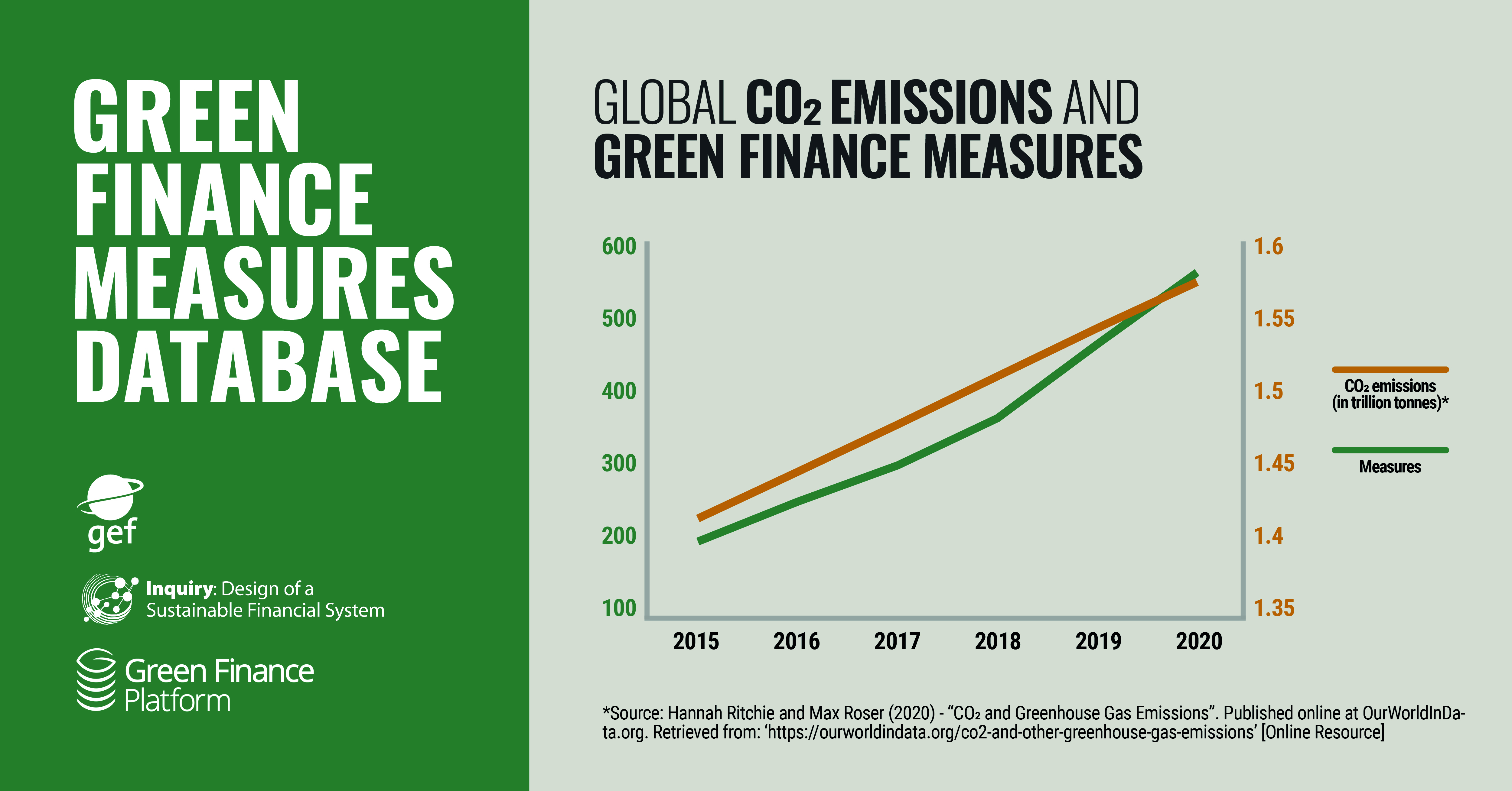
"With global CO2 emissions still rising, governments must shift the allocation of capital towards their #ClimatePledges"

The political dynamics underpinning a more coordinated approach to green finance measures – in response to the insufficiencies and inadequacies of market-driven solutions to green the financial system – are an important caveat. As climate-related radical uncertainty intersects with non-reversible climate tipping points, regulators and supervisors need to move beyond quantitative analyses that have characterized risk-based approaches to financial measures over the past 6 years.

Read More

https://www.greenfinanceplatform.org/financial-measures/browse

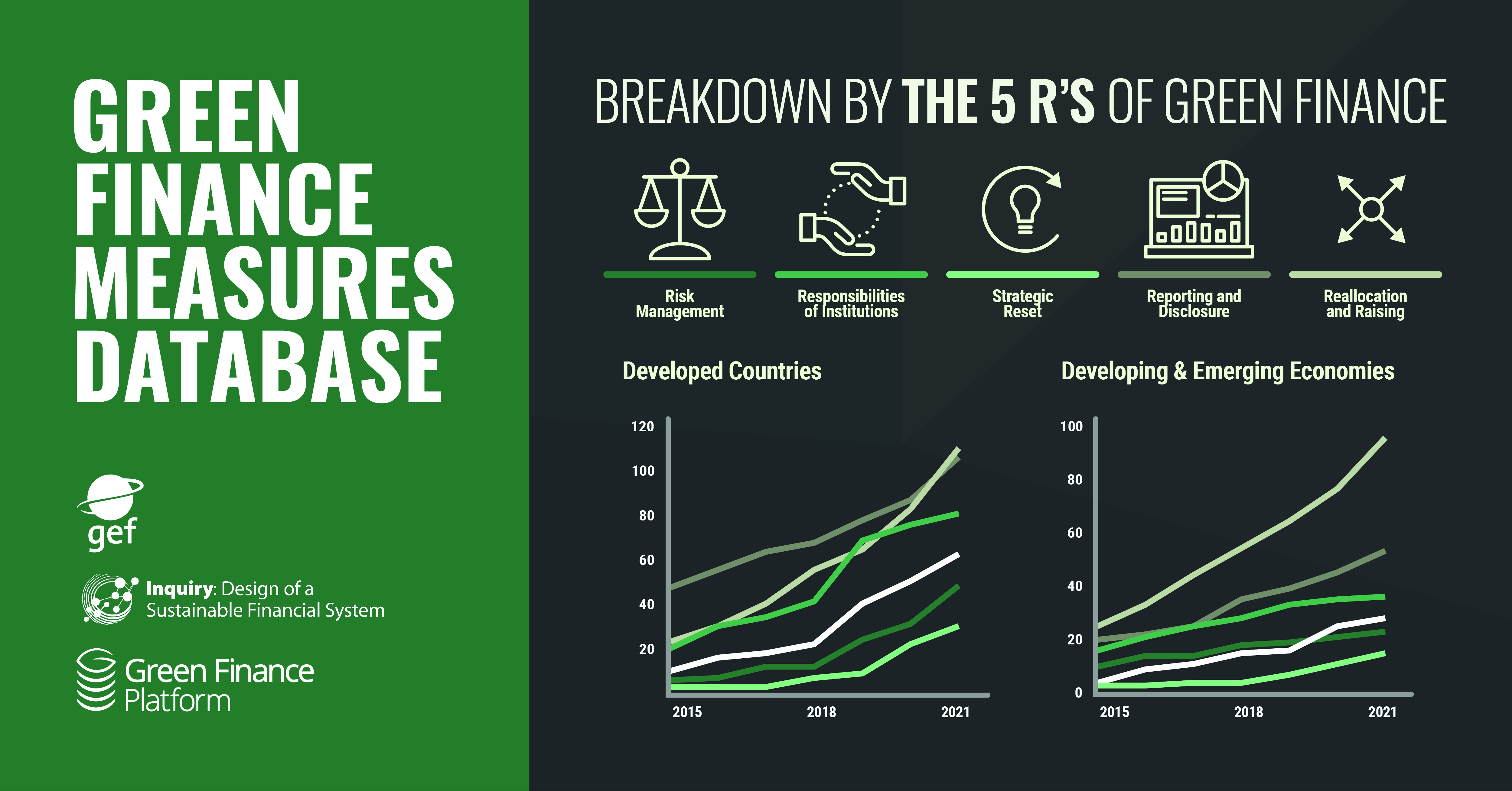
Where financial regulators currently stand on addressing climate change?

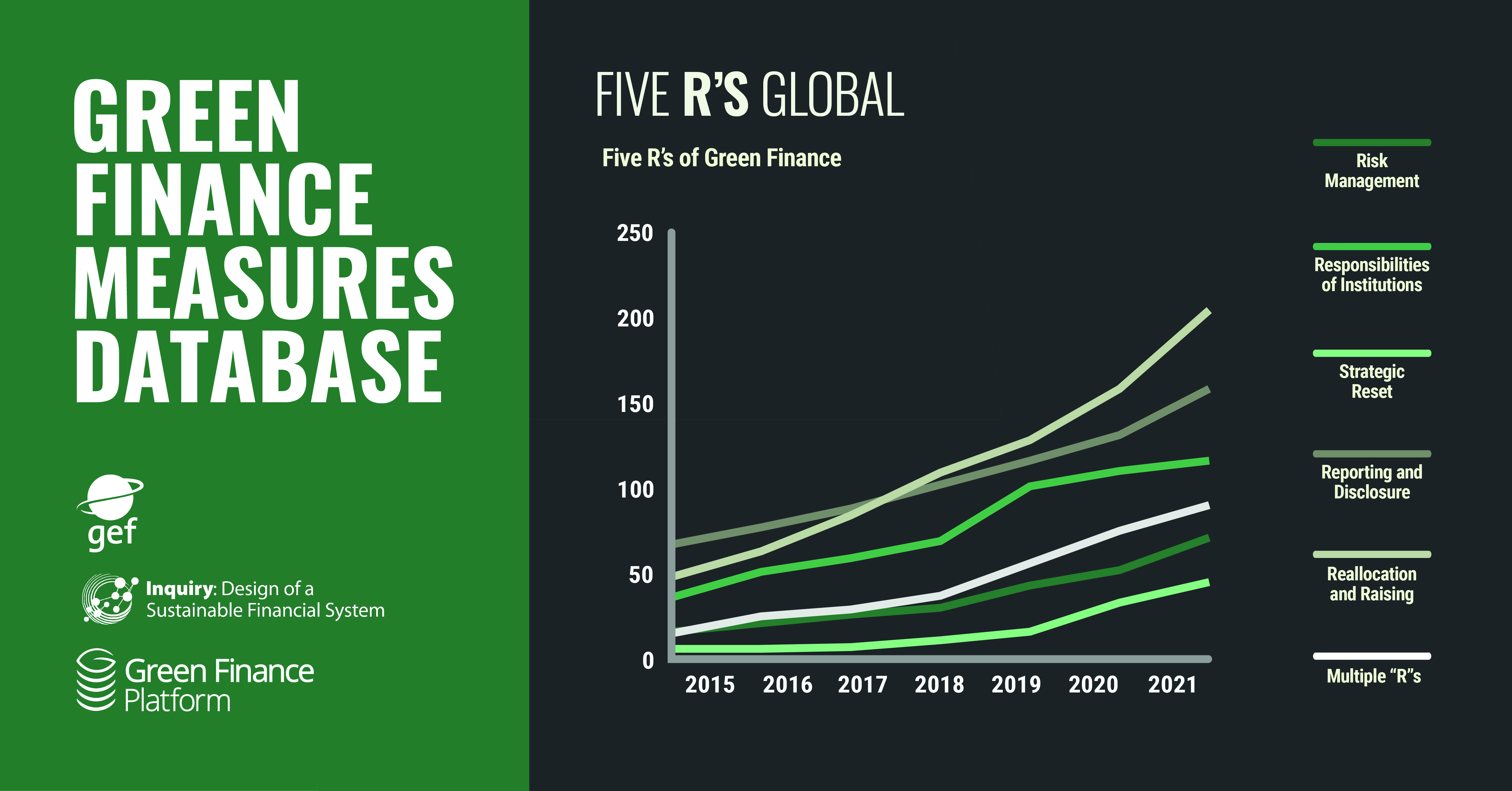
An increasing number of green finance measures are being adopted around the world by policymakers and regulators in a shift toward green finance policy and regulation that goes beyond market-driven solutions.

In addition, 2021 saw a surge in green finance regulations, with 124 measures implemented globally. This reflects the awareness of governments that the financial system will need to be aligned with their net-zero commitments announced during the year. The growing number of green finance measures has been driven by renewed international cooperation, steered by the re-establishment of the G20 Sustainable Finance Study Group and the updated climate pledges announced in the lead-up to the COP26 UN Climate Change Conference in Glasgow in November 2021.

Read More

https://www.greenfinanceplatform.org/news/new-era-government-intervention-green-finance-measures
Clara Mottura commented on Colm Hastings's Post in Agriculture, Green Recovery from COVID-19, Climate Change

Our food systems are failing us. Over 800 million people are suffering from hunger, while 13% of the world’s population are obese. So what is to blame?

Agricultural production follows the money. And 87% of the $540 billion given to agricultural producers each year is either price distorting or harmful to nature and human health. So what we can do to fix it?

Listen to our latest #podcast to find out! We discuss how #foodsystems transformation can generate system-wide benefits while protecting farmers, consumers and nature ?

Co-produced with UNDP and UNEP. Listen below:

? Spotify spoti.fi/3xkXt91
? Apple apple.co/30XUDug
? Or search for The Green Renaissance wherever you get your podcasts.

To read UNDP, UNEP and FAO's new report, which provides many of the answers in this month's episode, click here ? bit.ly/3DRrks9

Read More

https://www.uncclearn.org/podcasts/the-green-renaissance-podcast/the-multi-billion-dollar-food-syste...
https://youtu.be/AEIHCPCL-Mw

Watch Green Recovery: On Trial -and see how youth grade the Global Green Recovery from COVID-19.

Read More

https://www.youtube.com/watch?v=nfHSBxfLd_k&ab_channel=GreenEconomyCoalition

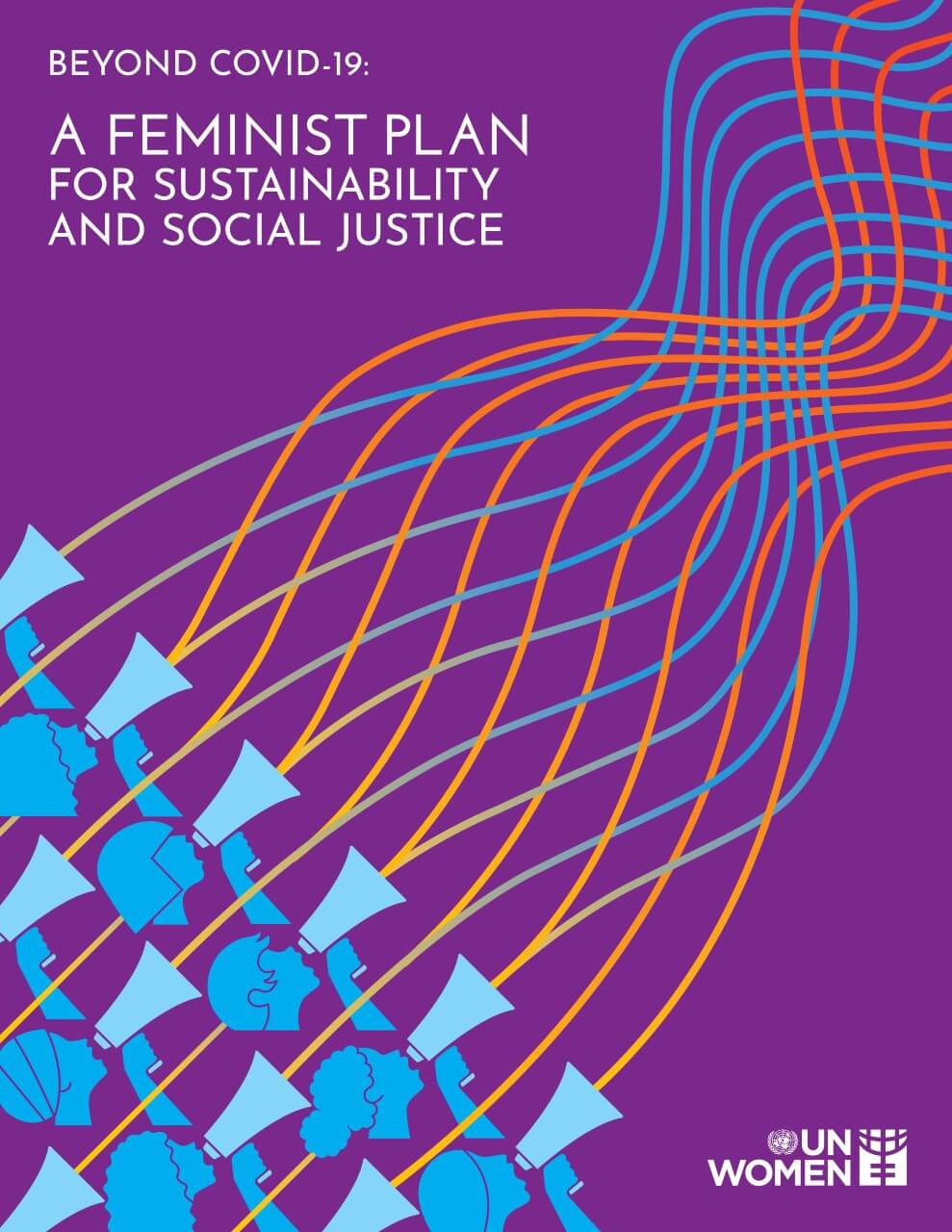
There can be no just transition without gender justice.

Indeed, the pandemic has drawn attention to a trio of interlocking crises that systematically undermine gender equality: jobs, care and climate.

In response, UN Women’s new “Feminist plan” provides a visionary but practical roadmap for putting gender equality, social justice, and sustainability at the centre of the recovery and transformation.

Visit the webpage to find our more.

Read More

https://www.unwomen.org/en/digital-library/publications/2021/09/feminist-plan-for-sustainability-and...
https://youtu.be/HsvSkCW0Bik